




Niacin does more than contribute to energy metabolism. The body uses it to make coenzymes involved in cellular energy production, including in the brain, so potential niacinamide benefits for brain function relate to the role vitamin B3 plays in normal brain activity. Research has linked higher niacin intake with some measures of cognitive health, but niacinamide isn’t a treatment for dementia or Alzheimer’s disease.
It’s understandable to look for ways to support memory and mental clarity, especially when changes in cognition raise questions about nutrition. Adequate vitamin B3 intake matters, but more isn’t automatically better, and supplements have safety considerations.
This article explains how niacin works in the body, what research suggests about cognition and memory, and how severe deficiency can affect the brain. It also discusses niacinamide supplement safety, possible side effects, and when persistent memory concerns warrant medical attention.
Key Takeaways
- Understand how niacin contributes to the coenzymes involved in cellular energy production and brain activity.
- See what studies suggest about niacin intake and cognitive health, and why an association does not establish a treatment.
- Learn how severe vitamin B3 deficiency can affect cognition and which factors may increase the risk of low levels.
- Recognize key supplement safety considerations, including potential side effects at high doses.
- Explore Super Niacinamide as a supplement option, while keeping its role distinct from treatment for memory or cognitive disorders.
Possible protection against dementia and Alzheimer’s disease
Niacin supports coenzymes involved in energy production, and human studies have linked higher niacin intake with cognitive outcomes. These findings suggest a possible association, not proof that niacinamide prevents Alzheimer’s disease or dementia.
Dietary Niacin and Alzheimer’s Risk
Research on dietary niacin and Alzheimer’s risk examines observed links between niacin intake and later cognitive outcomes. This matters because dietary intake is not the same as a proven strategy for preventing disease.
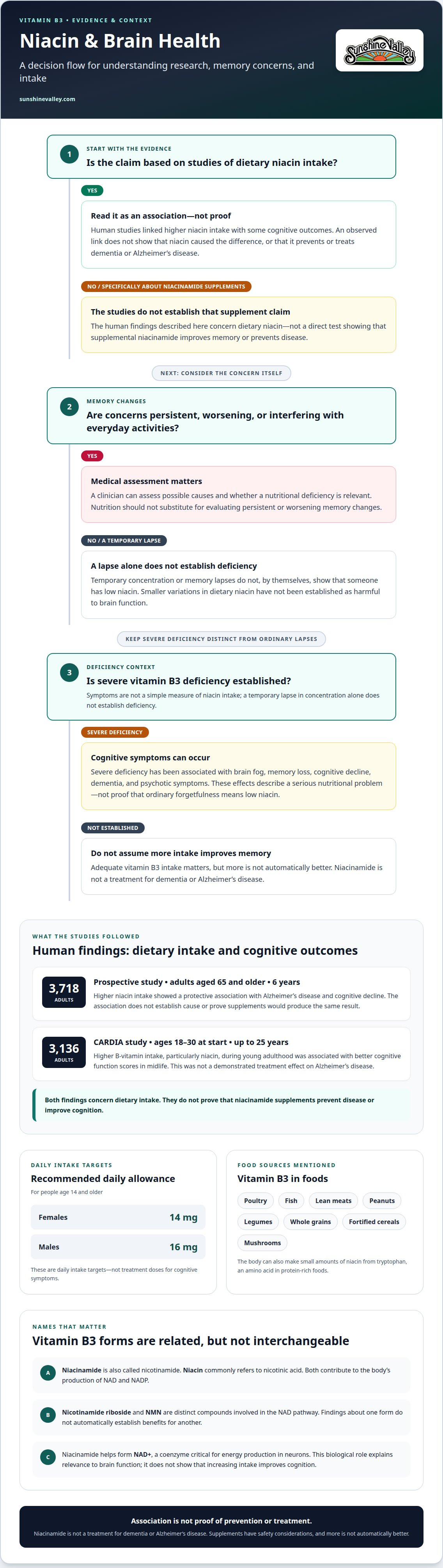
A prospective study followed 3,718 adults aged 65 and older for 6 years. Participants with higher niacin intake showed a protective association with Alzheimer’s disease and cognitive decline. An association does not establish that niacin caused the difference, or that supplements would produce the same result.
The CARDIA study followed 3,136 adults aged 18-30 for up to 25 years. Higher B-vitamin intake, particularly niacin, during young adulthood was associated with better cognitive function scores in midlife. These findings concern dietary intake and cognitive scores, not a demonstrated treatment effect on Alzheimer’s disease.
For readers considering food or supplements, the human findings described here involve dietary niacin. They do not establish that supplemental niacinamide is more effective for brain health than foods containing niacin.
Niacinamide and Related Compounds
Niacinamide, also called nicotinamide, is a form of vitamin B3; niacin commonly refers to nicotinic acid. Both contribute to the body’s production of NAD and NADP, while nicotinamide riboside and NMN are distinct compounds involved in the NAD pathway.
This distinction matters because findings about one form cannot automatically establish benefits for another. The dietary studies examined niacin intake, not a direct comparison of niacinamide, nicotinamide riboside, NMN, and niacin supplements.
Niacinamide is not interchangeable with every product described as an NAD precursor. These names refer to different compounds, even though they relate to pathways involved in cellular energy. For Alzheimer’s disease, the study findings indicate an association with niacin intake, not that any one form prevents or treats the disease.
Human Evidence and Brain Energy
The findings provide limited human evidence about niacinamide’s effects on cognition: the studies report associations with niacin intake, not proof of an effect from niacinamide. This distinction helps readers assess memory-related claims without mistaking an observed link for a treatment result.
Niacinamide helps form NAD+, a coenzyme critical for energy production in neurons. NAD also participates in the electron-transport chain and ATP synthesis, processes cells use to produce energy. This biological role explains why vitamin B3 is relevant to brain function, but it does not show that increasing intake improves cognition.
More research is needed before recommendations can be made about niacin and Alzheimer’s disease. Niacinamide is not a treatment for dementia or Alzheimer’s disease. If memory changes persist or worsen, nutrition should not be considered a substitute for assessing possible causes.
Severe niacin deficiency and cognitive symptoms
Severe vitamin B3 deficiency can affect cognition, including memory, and may involve brain fog or psychotic symptoms. These effects differ from the uncertain consequences of smaller variations in dietary niacin.
Cognitive Effects of Severe Deficiency
Severe niacin deficiency is a lack of vitamin B3 substantial enough to be associated with cognitive symptoms. Recognizing that distinction matters: a temporary lapse in concentration alone does not establish a deficiency.
Reported symptoms include brain fog and psychotic symptoms. Severe deficiency has also been associated with cognitive decline, memory loss, and dementia. These effects describe a serious nutritional problem, not evidence that ordinary forgetfulness means someone has low niacin.
Niacin is water-soluble, and the body doesn’t store large amounts. Regular intake therefore matters. Poultry, fish, lean meats, peanuts, legumes, whole grains, fortified cereals, and mushrooms are food sources of vitamin B3. The body can also make small amounts naturally from tryptophan, an amino acid in protein-rich foods.
For context, the recommended daily allowance for females age 14 and older is 14 milligrams, according to the National Academies of Sciences, Engineering, and Medicine. For males age 14 and older, it is 16 milligrams. These values describe daily intake targets; they are not treatment doses for cognitive symptoms or proof that a supplement will reverse them.
Memory and Attention Changes
Memory and attention are aspects of cognitive function supported by nutrition, but symptoms can have multiple causes. Identifying a dietary gap is different from assuming niacin explains a change in thinking.
Severe niacin deficiency has been linked with cognitive decline, including memory loss and dementia. Brain fog may make it harder to focus or think clearly, while psychotic symptoms are a more serious change. These symptoms should be considered in context, rather than treated as a simple measure of vitamin B3 intake.
Smaller variations in dietary niacin intake have not been established as harmful to brain function. This can help readers avoid treating every lapse in attention as a deficiency, or assuming that higher intake will improve memory. Food intake, overall health, and persistent symptoms all matter when considering nutrition.
Persistent memory concerns warrant medical attention, especially when they worsen or interfere with everyday activities. A clinician can assess possible causes and whether nutritional deficiency is relevant. Niacin supplements are not a substitute for that assessment or a stand-alone treatment for dementia, psychotic symptoms, or memory loss.
Supplement safety and possible side effects
Vitamin B3 supplements differ in form and dose, so the label matters. Niacinamide and nicotinic acid are both forms of vitamin B3, but their effects aren’t identical. Niacinamide doesn’t cause the flushing sometimes associated with nicotinic acid. That distinction helps explain why niacin-related safety information shouldn’t automatically be applied to every form in the same way.
For adults in the United States, the tolerable upper intake level for niacin is 35 milligrams per day. This limit is not a target or a therapeutic dose. The recommended daily allowance for adults is lower for many people: 14 milligrams for females age 14 and older, and 16 milligrams for males age 14 and older. Nutrition from food and intake from supplements both matter when considering total amounts.
Nicotinic acid supplements can cause a niacin flush, especially at doses higher than 30 to 50 milligrams. The skin may become warm, red, itchy, or tingly, and flushing may begin within 30 minutes. This effect is associated with nicotinic acid, not the flushing response sometimes linked to niacinamide. Recognizing the form on a supplement label can help readers interpret these different effects.
High-dose niacinamide has separate safety considerations. Possible side effects include nausea, stomach discomfort, headaches, and fatigue. Long-term use at high doses can strain the liver; doses of 3 grams per day or more have rarely been associated with liver toxicity. People taking 1,500 milligrams per day or more should have periodic liver function tests.
High-dose use also calls for attention to health conditions and medicines. People with liver disease, kidney disease, diabetes, or gout should speak with a doctor before starting vitamin B3 supplements. Therapeutic doses above the recommended daily intake should be taken only under medical supervision. This is especially relevant when someone is considering supplements for brain function, because the evidence linking dietary niacin with cognition doesn’t establish a safe or effective high-dose treatment.
Keep the purpose clear. A supplement is not a treatment for dementia or Alzheimer’s disease, and increasing intake does not establish better memory outcomes. Topical niacinamide is a skin product, not a substitute for oral nutrition or care for cognitive symptoms. Persistent memory concerns warrant medical attention, and supplement decisions should account for the form, dose, other products, and individual health risks.
Nerve health and DNA repair
Nicotinamide, also called niacinamide, contributes to NAD+ production. NAD+ supports cellular energy processes and DNA repair, both relevant to brain health. These roles explain why vitamin B3 is studied in relation to nerve function, but they don’t establish it as a treatment for neurological disease.
Nerve cells rely on efficient signaling to communicate across the nervous system. Niacinamide supports nerve health and helps maintain this signaling. At the cellular level, niacinamide helps form NAD+, which supports energy production within cells. This mechanism provides context for research on brain function, not evidence that extra intake improves signaling in people without deficiency.
DNA repair helps cells respond to damage that occurs during ordinary activity. Niacinamide’s role in forming NAD+ connects it with this process, including in brain cells. Neurons need energy to function, and DNA integrity is part of cellular maintenance. This relationship does not mean supplements prevent brain-cell damage or stop neurological disease.
Parkinson’s disease research illustrates the difference between a biological pathway and a proven treatment. NAD+ levels fall in patients with Parkinson’s disease. In familial Parkinson’s disease characterized by PINK1 mutations, NAD+ supplementation or inactivation of NAD-consuming enzymes rescued mitochondrial defects and protected neurons against degeneration in research models. These findings concern a specific disease mechanism, not proof that niacinamide treats Parkinson’s in people.
Severe vitamin B3 deficiency can cause pellagra, a disease associated with serious health effects, including cognitive symptoms. That context differs from claims that excess niacinamide can improve nerve health. More intake isn’t automatically better, and high-dose supplements carry safety considerations, including possible liver strain.
Nicotinic acid and nicotinamide are both forms of vitamin B3, but they don’t have identical effects. Nicotinic acid can cause flushing; niacinamide doesn’t cause the flushing sometimes associated with that form. This difference helps explain why evidence about one form shouldn’t automatically be treated as evidence for another.
Niacinamide has also been studied outside brain health. In one study, high-risk individuals taking nicotinamide had a reduced incidence of non-melanoma skin cancer at 500 milligrams twice daily. That result concerns skin cancer, not nerve signaling, DNA repair in the brain, or prevention of neurological disease.
When assessing brain-health claims, separate three points: NAD+ biology, findings in specific research models, and demonstrated effects in people. The first two help explain scientific interest, but they do not make niacinamide a treatment for Parkinson’s disease, cancer, or other conditions, or show that excess intake protects nerves.
Niacin and memory in older adults
Vitamin B3, including niacinamide, is involved in brain function. Adequate intake supports memory, attention, and mental clarity as part of overall nutrition, but that role doesn’t mean supplements prevent age-related cognitive decline. For older adults, the practical question is whether everyday food intake and health circumstances support adequate niacin levels.
Some older adults face a greater risk of low vitamin B3 levels. Reduced appetite, limited diets, digestive changes, chronic illnesses, and certain medications can affect nutritional intake or needs. These factors are associated with possible deficiency risk; they don’t show that memory changes are caused by niacin alone. Tracking appetite changes, a narrowing range of foods, and new memory concerns can help frame a discussion with a healthcare professional.
Diet remains one way to obtain niacin. Poultry, fish, lean meats, peanuts, legumes, whole grains, fortified cereals, and mushrooms provide vitamin B3. For example, a meal combining a protein source with whole grains or legumes adds variety rather than relying on one food. The body also makes small amounts of niacin from tryptophan, an amino acid found in protein-rich foods.
Unlike a single supplement, a varied diet provides a combination of nutrients. Nutritional needs also depend on appetite, food choices, digestion, health conditions, and medications. A food record can help someone describe usual meals and recent changes during a clinical discussion. It does not diagnose deficiency, but it can make dietary patterns easier to explain.
Memory is influenced by more than vitamin intake. Persistent or worsening concerns deserve medical attention, particularly if they interfere with familiar daily tasks. A clinician can consider potential causes, review chronic conditions and medications, and determine whether nutritional deficiency is relevant. Diabetes is also a reason to discuss vitamin B3 supplementation with a doctor before starting it.
Research linking higher niacin intake with cognitive outcomes describes an association, not proof that taking more niacin improves memory. This distinction matters when evaluating supplement claims. The human findings concern dietary niacin intake; they do not establish that niacinamide supplements are more effective than food for older adults’ brain health, or that either prevents Alzheimer’s disease.
Older adults considering supplementation can first clarify the goal: correcting a nutritional gap is different from treating memory loss. A professional can weigh dietary patterns, digestive changes, medications, and health conditions together. Explore niacinamide supplement options as part of an informed approach to vitamin B3, not as a substitute for care when memory changes persist.
Sunshine Valley: Super Niacinamide
Sunshine Valley offers Super Niacinamide, a powdered supplement option for readers considering vitamin B3 as part of their nutrition routine. The research discussed above links niacin intake with cognitive health, but it doesn’t establish niacinamide as a treatment for memory loss, dementia, or Alzheimer’s disease.
Super Niacinamide fits readers who want to explore this specific form of vitamin B3. Sunshine Valley emphasizes premium-quality ingredients, modern manufacturing, and strict hygiene standards. Consider supplement safety and your personal health circumstances before adding high-dose niacinamide, especially if you have a health condition or take medication.
For questions about Super Niacinamide, contact Sunshine Valley.
Make your next step an informed one
Use what you’ve learned about the potential niacinamide benefits for brain function to make thoughtful nutrition decisions, not to self-diagnose or replace care for persistent memory changes. Research findings do not establish niacinamide as a way to prevent or treat Alzheimer’s disease.
If you’re considering a supplement, keep your purpose clear and account for your diet, health conditions, and medications. Sunshine Valley offers Sunshine Valley® Super Niacinamide, along with Sunshine Valley® Super Mannitol, Sunshine Valley® Super Inositol, and Sunshine Valley® Super Lactose. Choose products in line with your needs, and discuss supplement use with a healthcare professional when safety concerns apply.
For information about Sunshine Valley’s offerings, contact Sunshine Valley today. A measured approach to brain health starts with sound information and a considered next step.
Frequently Asked Questions
What does niacin do?
Niacin, or vitamin B3, helps the body make coenzymes called NAD and NADP. These coenzymes participate in energy production and other cellular processes, including those needed for normal brain function. Niacinamide is one form of vitamin B3. The body can also make small amounts of niacin from tryptophan, an amino acid found in protein-rich foods, so intake reflects both diet and this conversion.
Does niacinamide improve memory, focus, or cognitive performance?
Current evidence does not establish that niacinamide benefits for brain function include improved memory, focus, or cognitive performance. Human studies have associated higher dietary niacin intake with certain cognitive outcomes, but they don’t show that taking niacinamide caused those outcomes. Adequate vitamin B3 intake is part of overall nutrition; it isn’t a proven way to sharpen thinking or reverse cognitive changes.
Can niacinamide help prevent or treat Alzheimer's disease or other neurodegenerative disorders?
No. Niacinamide is not an established way to prevent or treat Alzheimer’s disease, dementia, Parkinson’s disease, or other neurodegenerative disorders. Findings about niacin intake or NAD-related pathways do not demonstrate that niacinamide supplements prevent disease or alter its course. If memory problems persist or worsen, seek medical assessment rather than relying on a supplement to identify or manage the cause.
What do clinical trials and systematic reviews say about niacinamide for brain health?
Claims about niacinamide benefits for brain function should be distinguished from findings on dietary niacin intake. The human findings discussed here are associations with cognitive outcomes, not evidence that a niacinamide intervention improves brain health. They do not establish a treatment effect or show that supplements prevent dementia. When interpreting a study or review, note whether it examined dietary intake, a supplement form, or a clinical outcome.
What is the recommended niacinamide dosage, and is there a safe upper limit?
Recommended allowances apply to niacin intake, not to a therapeutic niacinamide dose. For adults, the cited allowances vary by life stage and sex, while pregnancy and breastfeeding have separate values. The US adult upper intake level for niacin is 35 milligrams per day; this isn’t a target dose or a treatment recommendation. High-dose use should be medically supervised because safety depends on dose and health circumstances.
What are the side effects and risks of taking niacinamide supplements?
At high doses, niacinamide may cause nausea, stomach discomfort, headaches, or fatigue. Long-term high-dose use can strain the liver; doses of 3 grams per day or more have rarely been associated with liver toxicity. People taking 1,500 milligrams per day or more should have periodic liver function tests. These risks make the supplement amount and duration important parts of any use decision.
Can niacinamide interact with medications or medical conditions?
People with liver disease, kidney disease, diabetes, or gout should speak with a doctor before starting vitamin B3 supplements. Share a full list of medicines and supplements, since this helps a healthcare professional assess safety for your circumstances. Don’t change prescribed treatment to add niacinamide. This is especially important with high-dose use or ongoing memory concerns, which need appropriate clinical attention rather than self-treatment.



Leave a comment
This site is protected by hCaptcha and the hCaptcha Privacy Policy and Terms of Service apply.