



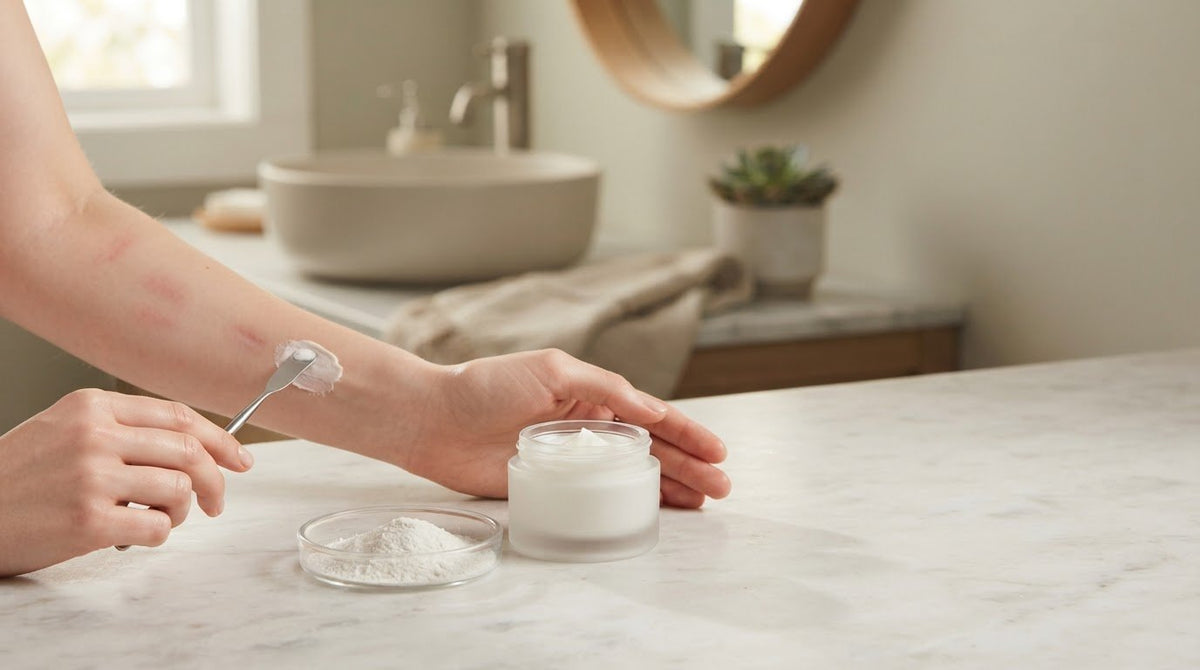
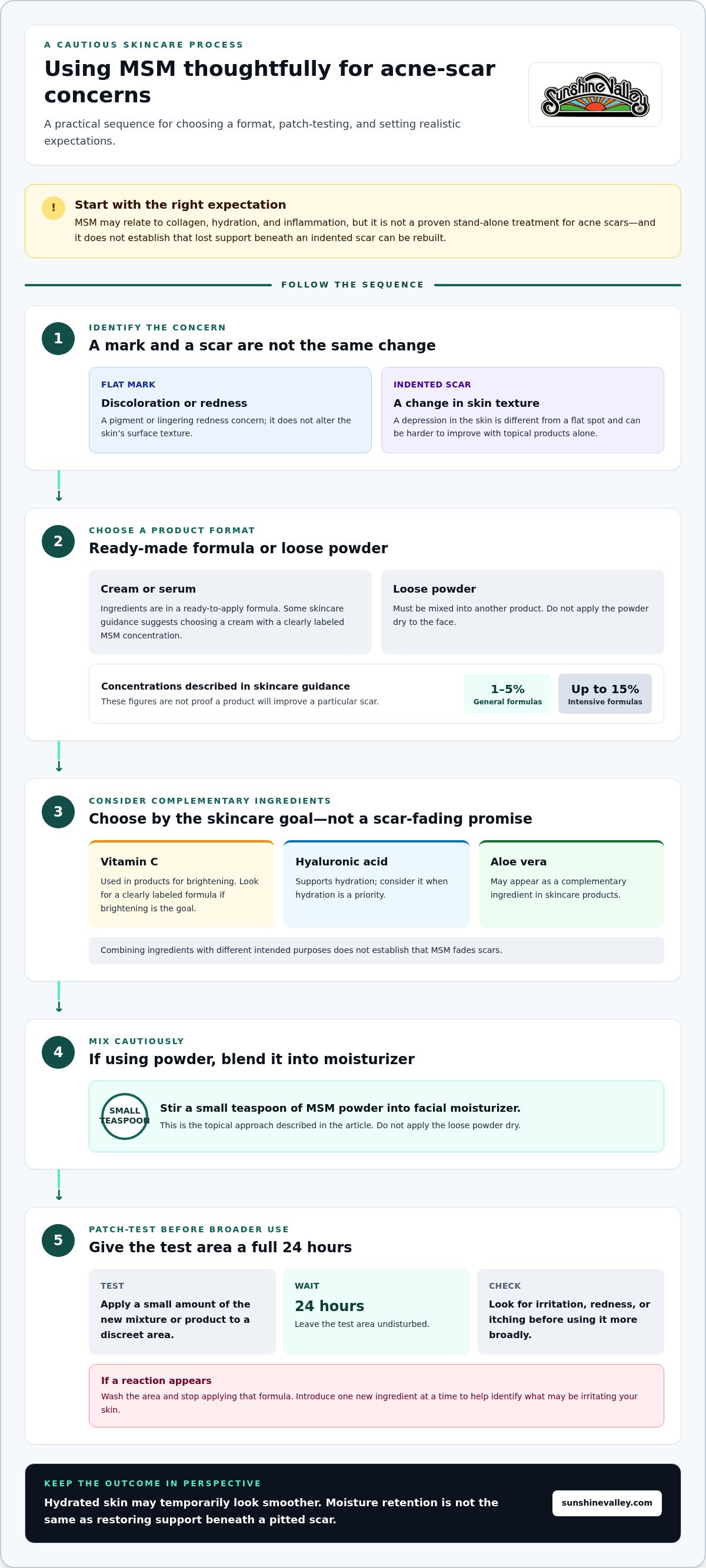
MSM powder may support skin’s collagen-related processes, but it isn’t a stand-alone fix for pitted acne scars. To understand how to use MSM powder for acne scars, mix a small teaspoon into facial moisturizer rather than applying the powder dry, then patch-test the mixture and leave the test area undisturbed for 24 hours.
It’s understandable to hope that one ingredient can fade every mark. The key distinction is scar type: flat post-acne discoloration and redness may respond differently from indented scars, which involve changes in skin texture. This guide explains how MSM may relate to collagen and inflammation, how to combine it thoughtfully with ingredients such as vitamin C or hyaluronic acid, and what realistic results may look like for different types of scarring. You’ll also learn how to introduce it gradually and protect your skin while you assess its response.
Key Takeaways
- Learn to distinguish flat discoloration from indented scars, since they involve different skin changes and may respond differently to topical care.
- See how MSM’s potential relationship with collagen and inflammation may matter for skin appearance, without treating it as a proven fix for every scar.
- Understand which supporting ingredients, including vitamin C and hyaluronic acid, may complement an MSM skincare routine.
- Set realistic expectations: changes in redness or texture may take consistent use, while pitted scars can be more difficult to improve with topical products alone.
- Find out what signs of irritation to watch for as you introduce a new skincare product and assess how your skin responds.
Combining MSM with other skincare ingredients
MSM powder is sometimes mixed into facial moisturizer, but it is not a proven stand-alone treatment for acne scars. If you’re exploring topical use, one approach described for skincare is stirring a small teaspoon into moisturizer. Start cautiously and assess your skin before using it regularly.
For a medically grounded overview of topical and oral MSM, watch Dr. Dray’s discussion:
Combination formulas may pair MSM with ingredients that have distinct skincare roles. Vitamin C is used in products for brightening, while hyaluronic acid supports hydration. Aloe vera also appears in some formulas. These combinations do not establish that MSM fades scars; they simply bring together ingredients with different intended purposes.
- Vitamin C: Look for a clearly labeled formula if brightening is your goal.
- Hyaluronic acid: Consider it when hydration is a priority.
- Aloe vera: It may appear as a complementary ingredient in skincare products.
Product format matters. A cream or serum lists its ingredients in a ready-to-apply formula, while loose powder must be mixed into another product. Some skincare guidance suggests choosing a cream with a clearly labeled MSM concentration. It also describes general skincare formulas containing 1-5% MSM and intensive formulas containing up to 15%. These concentrations are not proof that a product will improve a particular scar.
Patch-test every new MSM mixture or product. Apply a small amount to a discreet area and leave it undisturbed for 24 hours. Check for irritation, redness, or itching before using it more broadly. If a reaction appears, wash the area and stop applying that formula. Introducing one new ingredient at a time also helps identify which product may be irritating your skin.
Claims about acne and scars need careful interpretation. MSM-rich creams are promoted for acne and other scars, and a 2008 study examined MSM combined with silymarin for rosacea management. That example concerns rosacea, not proof of acne-scar improvement. MSM toner and face wash are also marketed for complexion care, but no single format should be treated as a guaranteed scar treatment.
Compared with retinoids, azelaic acid, microneedling, and lasers, MSM is a separate skincare ingredient, not an equivalent substitute. These options differ in form and use. The relevant choice depends on whether the concern is discoloration, active acne, or indented texture.
MSM and collagen production
Collagen is part of the skin’s structural framework, and sulfur is one of its components. MSM, or methylsulfonylmethane, is an organic sulfur compound. This connection has prompted interest in whether MSM can support collagen production, improve skin hydration, or soften visible marks. It does not, by itself, establish that topical MSM rebuilds collagen lost within an indented acne scar.
Age-related changes help explain the interest. The research summary reports that people begin losing about 1% of their collagen each year around age 20. This broad pattern concerns skin aging, not acne scars specifically. Scar appearance also depends on the type of tissue change: a flat mark differs from a depression in the skin, even if both follow acne.
A 2015 study cited in connection with the National Institutes of Health reported improved fine lines and wrinkles with MSM supplementation, attributing the appearance changes to enhanced collagen production. That finding relates to skin aging, not proof that MSM erases acne scars. Research also reported that oral MSM at 3 g per day reduced signs of aging, including facial wrinkles and roughness, and improved firmness, elasticity, and hydration. These outcomes should not be treated as evidence of the same effects for every scar type.
Topical use has its own line of evidence. Research published in the Journal of Cosmetic Dermatology found that topical MSM increased skin hydration and moisture retention. Hydrated skin may temporarily look smoother, but retaining moisture is not the same as restoring support beneath a pitted scar. That distinction matters in a skincare routine: softer surface skin does not demonstrate a change in scar depth.
Inflammation is another proposed connection. MSM is described as having anti-inflammatory properties, and reduced inflammation could affect the appearance of redness. However, the available research examines distinct outcomes, including hydration, signs of aging, and inflammatory responses. These findings do not guarantee collagen rebuilding or scar removal.
Use the evidence to set practical expectations. Identify whether your concern is dryness, rough texture, redness, or an indented scar, then assess any product against that specific concern. Keep the rest of your skincare routine stable as you introduce a new formula. Changing several ingredients at once makes it harder to tell what affected your skin. MSM may interest people seeking hydration or improved general skin appearance, but research on aging or moisture does not establish it as a treatment for atrophic acne scars.
What Are Post-Acne Marks?
After a breakout settles, the skin may retain a flat area of discoloration or redness. These post-acne marks differ from scars that alter the skin’s surface. A brown or gray spot is a pigment concern, while a depression or raised area reflects a change in texture. Both can follow acne, but the visible feature helps clarify what skincare may address. A flat mark and a pitted cheek, for example, are different skin changes.
Dark spots often reflect post-inflammatory hyperpigmentation, where pigment remains more visible after inflammation. Redness is another possible lingering sign. Neither flat discoloration nor redness is the same as a fine line, which relates to skin aging. Distinguishing these concerns helps keep a routine focused: a brightening ingredient addresses a different appearance concern than a product intended to support moisture or soften surface texture.
Acne involves inflammation, and the body’s inflammatory response helps explain why blemishes can leave visible marks. The NF-κB pathway regulates inflammatory responses inside cells. This provides context for research into ingredients that may affect inflammation, but a pathway’s role does not show that a particular skincare product clears acne or removes its marks. The visible result also depends on whether the concern is pigment, lingering redness, or altered skin texture.
Research published in the Journal of Drugs in Dermatology found that topical MSM helped reduce redness and inflammation in patients with rosacea. Rosacea is not acne, so this result does not establish MSM as a treatment for acne-related marks. It is a specific example of topical MSM being studied for redness and inflammation. Potential anti-inflammatory effects should remain distinct from evidence about dark spots or indented scars.
Let the mark’s appearance guide what you track. For a flat brown spot, note its color and contrast with nearby skin. For redness, observe whether the area looks less inflamed over time. For an indentation, assess its contour, not just its color. Keeping the rest of your routine steady makes these comparisons more useful than introducing several ingredients at once. A moisturizer can support moisture, but hydration alone does not show that pigment or scar texture has changed.
MSM’s possible role is limited to the concern being studied. Findings about rosacea-related redness do not prove that MSM fades post-inflammatory hyperpigmentation or changes a pitted acne scar. Track pigment, redness, moisture, and texture as separate observations. This distinction keeps expectations clear and helps you assess skincare claims against the specific mark you want to improve.
Expectations for before-and-after results
MSM results depend on the skin concern you’re tracking, from redness to indented texture. Compare the same area under similar lighting, and distinguish changes in discoloration from changes in scar depth.
Patience and Realistic Expectations
Set realistic expectations by judging MSM against a specific visible concern, rather than expecting it to erase every acne scar. Less redness, smoother texture, and faded discoloration are different reported improvements; a pitted scar changes the skin’s contour. Record the appearance of one mark before starting and review that same mark over time. A brighter-looking spot does not necessarily mean an indentation has filled in.
Skin type, scar severity, and scar type all affect what a before-and-after comparison can show. A flat brown mark and a deep cheek indentation, for example, have different features to assess. Keep a gentle cleanser and moisturizer consistent while introducing an MSM product. Changing several skincare products together makes it harder to identify what coincided with a change. Sulfur’s connection to collagen also does not establish that MSM will rebuild scar tissue.
Expected Time for Results
Allow enough consistent use to assess a visible change, rather than judging a product after only a few applications. Reported timelines differ by format and concern. Oral MSM has been associated with visible changes in inflammatory acne after eight to twelve weeks of consistent daily supplementation. MSM cream, by contrast, is generally assessed over several weeks or months.
Post-acne marks may take several months to improve in appearance. A report of no difference in pitted scars after almost a month illustrates why a short trial may not reveal a visible change, especially in texture. It does not establish that a longer trial will alter an indentation. Track redness, color, and contour separately, since each describes a different outcome.
- Redness: Compare the same area before and after consistent topical use.
- Discoloration: Note whether a flat mark appears lighter over several months.
- Indented texture: Assess depth and contour, not only surface color or moisture.
For a useful comparison, take a baseline photo before changing your routine, then repeat it under similar lighting. Do not judge progress by fine lines or hydration alone: topical MSM research on moisture retention examines a different outcome. During the day, sunscreen helps protect skin while you monitor marks. If you already use a vitamin-containing product, keep its use steady while assessing MSM instead of adding multiple new ingredients at once.
Atrophic acne scars
Topical products may support the appearance of flat marks, while procedures address indented texture. MSM cream may soften or smooth a scar’s surface, but available findings do not establish that it fills atrophic depressions. Surface hydration can change how skin feels without restoring the contour beneath a pitted scar.
Atrophic scars are indented areas left after acne, and they’re reported in 80 to 90% of acne patients. Their defining feature is altered skin contour, not simply lingering color. A flat brown mark, for example, differs from a shallow depression on the cheek. Identifying that difference helps set a useful goal for skincare and prevents color changes from being mistaken for changes in scar depth.
For topical use, apply a thin layer of MSM cream to the affected area and gently massage it in. This is surface care, not a way to replace tissue beneath an indentation. The proposed benefit is support for wound healing and a smoother, softer appearance. Consistency helps you assess surface changes, but does not make a topical product equivalent to a procedure.
Interpret evidence according to the outcome it measures. MSM supplementation may support wound healing and affect the appearance of post-acne scars, but this does not establish that topical MSM repairs indented scars. That finding concerns a supplement and wound healing; it does not establish that applying methylsulfonylmethane cream rebuilds a pitted scar. Research on wrinkles, hydration, or antioxidant effects addresses different concerns.
Topical treatments are more relevant when the concern is a flat mark, redness, or surface texture. Indented scars involve contour, so a cream’s effect on softness should not be mistaken for filling a depression. Procedures such as microneedling or lasers target skin texture more directly. The useful distinction is the scar’s depth and shape, not simply whether its color looks more even.
If you’re deciding how to use MSM powder for acne scars, first identify whether the mark is flat or indented. For a topical product, follow its directions and apply it gently rather than rubbing powder directly into your skin. Photograph the same scar under similar lighting to compare its contour, not just its color. Stop using an MSM product if it irritates your skin. Ongoing acne also matters because new breakouts can leave additional marks.
Understanding how to use MSM powder for acne scars also means recognizing what sulfur alone can’t demonstrate. MSM is an organic sulfur compound, but sulfur’s presence does not prove scar repair. A topical formula may suit surface care, while deeper depressions call for a different treatment approach. The key is to assess surface appearance separately from scar depth and keep expectations aligned with the concern you’re tracking.
Sunshine Valley: Super Mannitol
Sunshine Valley’s Super Mannitol is a separate powdered supplement, not MSM or a topical acne-scar treatment. Keep that distinction clear: the evidence discussed here concerns MSM, while Super Mannitol is an option for readers exploring the company’s wider supplement range.
For atrophic scars, choose products based on the concern being addressed. A supplement should not be treated as a substitute for topical scar care or procedures aimed at indented texture. If you’re considering Super Mannitol, explore it as a separate product, not as a way to fade acne marks.
Visit Sunshine Valley’s website to learn more about Super Mannitol.
Choose Your Next Step With Care
Deciding how to use MSM powder for acne scars starts with identifying the change you want to address. A flatter-looking mark, lingering redness, and an indented scar call for different expectations. Keep your skincare routine simple, introduce products thoughtfully, and assess visible changes consistently.
Topical skincare and supplements serve different purposes. Sunshine Valley offers Super Mannitol, Super Inositol, and Super Lactose as part of its supplement range. These are distinct from topical MSM and are not acne-scar treatments. Choose products based on their intended use, not on the assumption that one ingredient can address every skin concern.
If you’d like to explore Sunshine Valley’s offerings, contact Sunshine Valley. A considered next step can help you keep your approach clear and focused.
Frequently Asked Questions
How does MSM work?
MSM is an organic sulfur compound that researchers have examined for skin and inflammatory effects. Its proposed relevance to skin includes sulfur’s role in collagen and potential effects on inflammation. Topical products act on the skin’s surface, while supplements are taken orally, so findings for one route do not automatically apply to the other. When assessing changes to acne marks, the type of mark matters.
How much MSM should you take?
For oral supplementation, a common daily amount is 2-4 grams; people beginning supplementation are advised to start with 1-2 grams a day in divided doses to assess tolerance. A higher amount may reach 6 grams a day, but consult a healthcare professional before considering it. These amounts refer to oral MSM, not powder mixed into facial moisturizer. Follow product directions and don’t treat an oral amount as an acne-scar treatment dose.
Is MSM Safe?
Safety depends on whether MSM is used topically or taken as a supplement. For a new skincare formula, test a small area and leave it undisturbed for 24 hours, watching for redness, itching, or irritation. Stop applying it if a reaction occurs. Before starting an oral MSM supplement, consult a healthcare professional, especially if you have health concerns or take other supplements or medicines.
What is MSM and how does it address inflammation?
MSM, short for methylsulfonylmethane, is an organic sulfur compound studied for possible anti-inflammatory effects. The NF-κB pathway regulates inflammatory responses inside cells, providing context for research into inflammation and skin. That biological pathway alone does not show that MSM treats acne. A study in the Journal of Drugs in Dermatology reported reduced redness and inflammation with topical MSM in rosacea patients, who have a different condition from acne.
What is MSM anyway?
MSM is a sulfur-containing compound found naturally in plants, animals, and humans. It is used in topical skincare products and oral supplements, but these forms have different uses and are not interchangeable. A cream, for example, is applied to the skin, while a powder taken orally is a dietary supplement. The form matters when interpreting product directions or research findings.
What is MSM?
MSM is the common abbreviation for methylsulfonylmethane, an organic sulfur compound found in skincare products and dietary supplements. Check the product label for its intended route: a topical cream is formulated for application to the skin, while a dietary powder is intended for oral use according to its directions. Choosing the appropriate form avoids confusing surface skincare with supplementation.
What is Methylsulfonylmethane?
Methylsulfonylmethane is the full chemical name for MSM. The compound is described as a naturally occurring sulfur source found in plants, animals, and humans. On a label, “MSM” and “methylsulfonylmethane” refer to the same ingredient, not separate forms of sulfur. Product format still matters: topical preparations and supplements have different routes of use, so follow the directions for the specific product.
Does MSM powder help fade acne scars, and what evidence supports it?
Evidence does not establish MSM powder as a proven way to fade every acne scar. A study in the Journal of Clinical and Aesthetic Dermatology reported that MSM supplementation accelerated wound healing and improved the appearance of post-acne scars. That finding does not show that topical powder mixed into moisturizer fills indented scars. Assess flat discoloration separately from changes in skin contour, since these are distinct outcomes.


Leave a comment
This site is protected by hCaptcha and the hCaptcha Privacy Policy and Terms of Service apply.